Date Posted: 04.17.2026
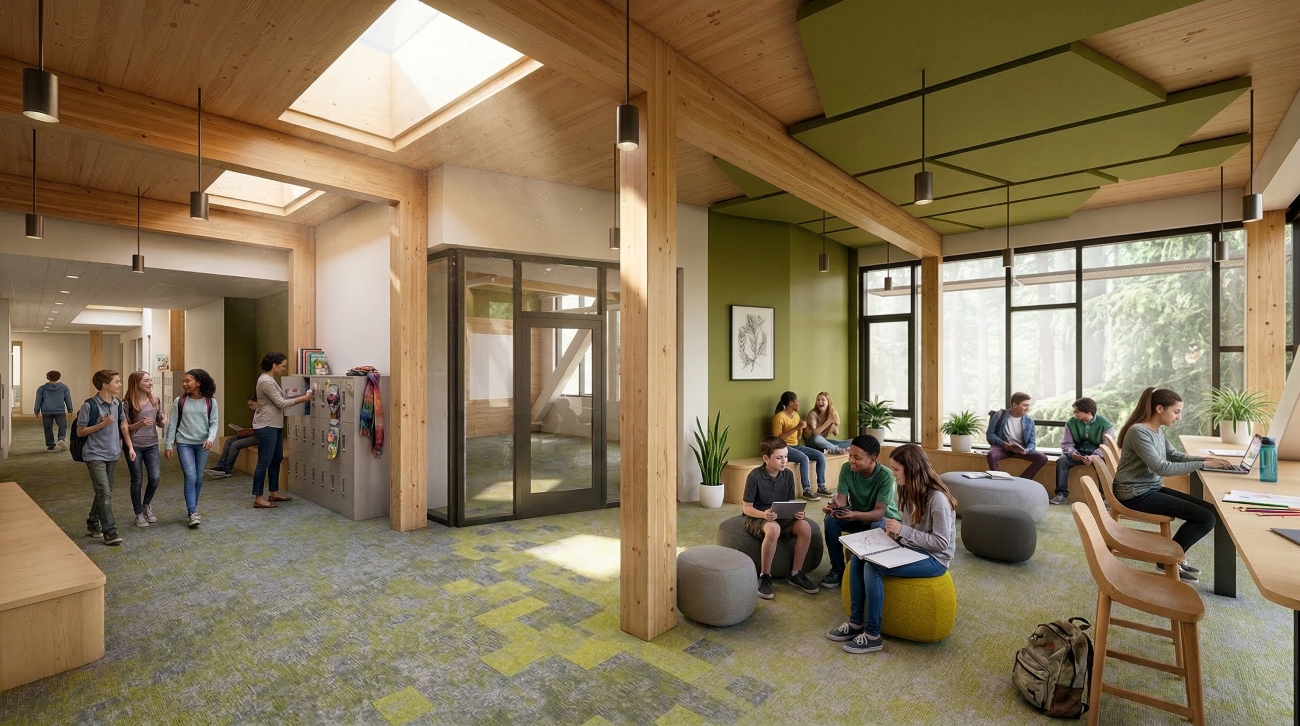
Mass timber is reshaping the future of school design, offering compelling benefits to both building performance and student experience. At Mithun, three schools entering or under construction illustrate how mass timber can shape healthier, more inspiring places to learn while also advancing performance, flexibility and sustainability. Bertschi Schoolhouse, The Bush Middle School and Emerson Campus demonstrate how thoughtful design and emerging timber technologies can transform classrooms into biophilic, high-performing spaces that foster connection, curiosity and belonging.
The mass timber designs leverage insights from Mithun’s widely referenced Building Better Schools R+D study to optimize the use of wood, significantly reduce embodied carbon and leverage biophilic benefits to support occupant wellbeing.
The projects also are applying lessons learned from the comprehensive post-occupancy evaluation (POE) — completed after a year of operations in the Washington School for the Deaf’s (WSD) new mass timber academic building — that demonstrates the significant impact of the design. In the POE survey, seventy-five percent of educators observed improvements in student focus, behavior and engagement, while eighty-three percent reported a stronger sense of belonging. These compelling results reinforce mass timber’s capacity to positively support occupant wellbeing — reducing stress, improving daylighting and increasing engagement in a conducive, home-like learning environment that equips students to thrive.
BERTSCHI SCHOOLHOUSE
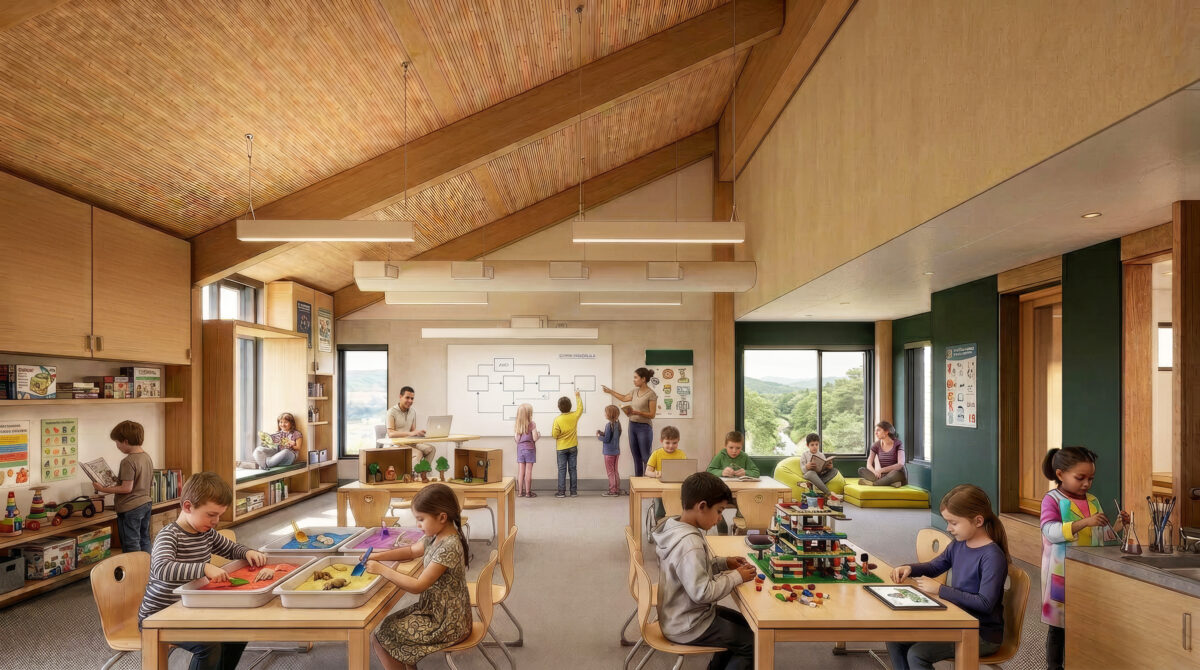
The new Schoolhouse is a three-story building for The Bertschi School that is designed to enrich learning for students and extend the capacity of this urban K-5 campus in Seattle’s Capitol Hill neighborhood. The Schoolhouse balances sensitivity to adjacent residences with a warm, modern expression that reflects the independent school’s values, using mass timber throughout: acoustic dowel laminated timber (ADLT), glulam post-and-beam frames and durable wood cladding work together to create an inviting learning environment.
Designed to serve approximately 100 students in kindergarten through second grade, the Schoolhouse includes seven classrooms, shared learning areas, and flexible spaces that support collaboration and evolving teaching methods. Clear circulation and operational efficiencies support students, teachers and families across the broader campus.
A brand-new playground, nature play and community gardens inspire kids with a sense of wonder and curiosity. Sustainably harvested wood is utilized for the outdoor porch and scramble — integrating elements of biophilia. The overall sitework minimizes use of concrete, emphasizing environmentally responsible construction and lower-carbon materials.
The client and design team centered social equity, accessibility and inclusion throughout the design process to promote occupant wellbeing. SEAM and Salmon Safe certification targets ensure the campus supports belonging and long-term environmental stewardship.
THE BUSH MIDDLE SCHOOL
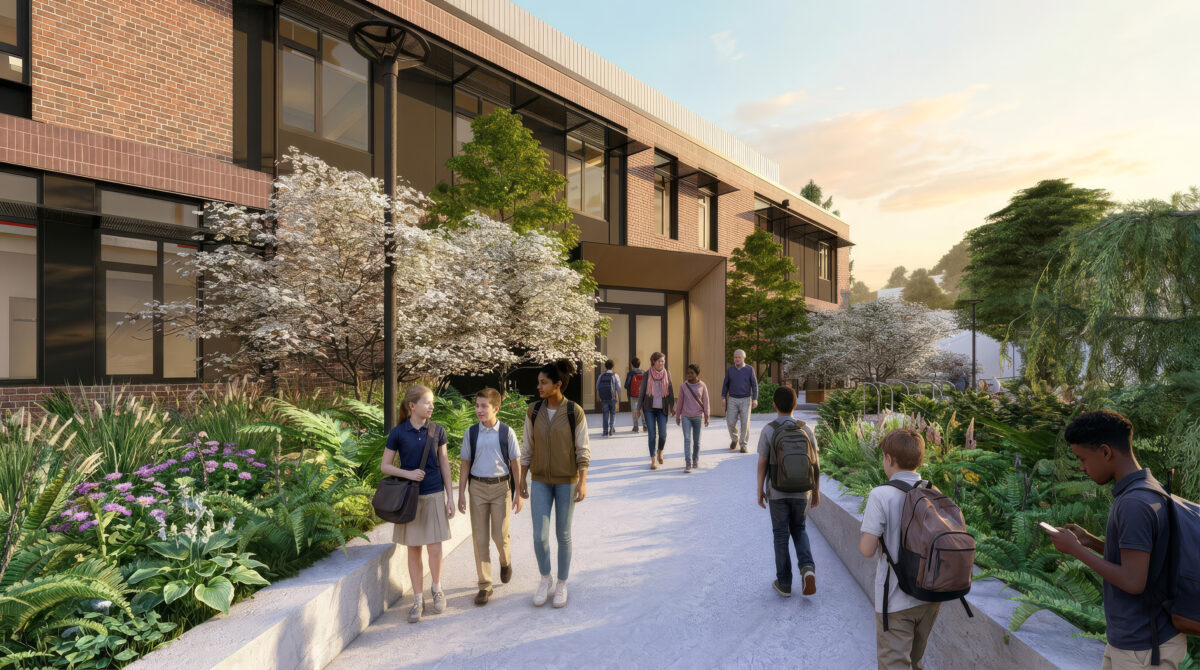
The Bush Middle School reimagines the existing middle school site through a phased, context-driven design. Set along a historic Olmsted-designed boulevard, the three-story replacement building balances campus continuity with a fresh expression rooted in Pacific Northwest architecture. The project builds upon lessons learned during the design and construction of The Bush School Upper School, a Passive House and Net Zero Energy certified facility with a mass-plywood structure that was nationally recognized with an AIA COTE Top Ten Award.
Expanded, 21st century learning spaces support collaboration, adaptability and wellbeing. Flexible classrooms, hubs and commons enhance daily student experience, while improved thermal and acoustic comfort promotes focus and health. A new commercial kitchen and multipurpose space strengthen operations and create a vibrant, daylit setting for gatherings.
The project advances environmental stewardship through mass timber construction and integrated site design. The timber system features glulam columns and beams with mass plywood deck over concrete basement and BRB shear walls. Photovoltaic installations support onsite renewable energy. The Bush School committed to all-electric equipment, including the commercial kitchen, to achieve a Zero Net Carbon goal. The design also adopts Passive House standards, including high-level detailing for air tightness. By prioritizing equity, ecological health and long-term resilience, the Middle School reinforces The Bush School’s role as a responsible neighbor and environmental steward.
EMERSON CAMPUS
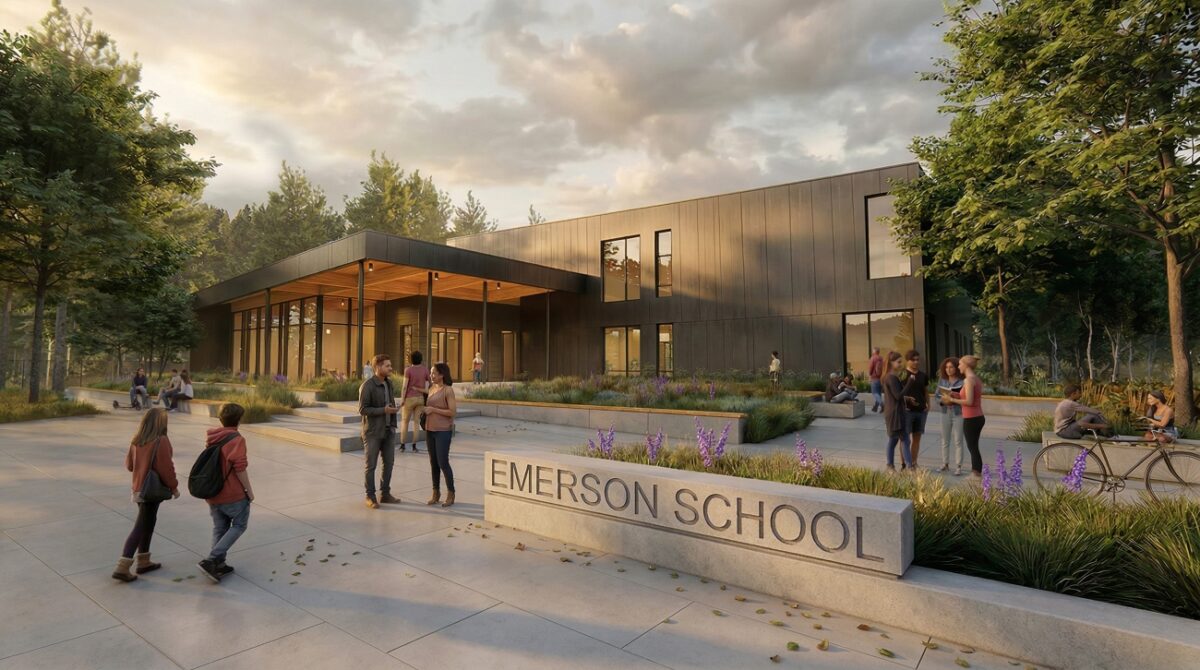
Rehousing multiple unique school programs that serve a wide range of learning needs — from early learners to high school graduation — together into one cohesive building requires careful consideration and well-designed, agile spaces that balance being both purpose-built and flexible to meet learning needs across the full K-12 spectrum. This progressive design-build project in collaboration with Lease Crutcher Lewis will replace and enlarge a facility that currently provides programming for Emerson High School, Emerson K-12 and Northstar Middle School, while also enhancing programs for infant daycare services and Career and Technical Education services supporting WANIC, a state-approved interdistrict CTE consortium. To support the full diversity of student learning and uphold the individuality of each school’s culture, all on a tight urban site graced with 331 beloved mature trees, the design solution looks to an efficient, flexible wood structure that weaves inside and out.
The constrained site is maximized through a stacked layout. By thoughtfully pairing small, medium and large learning labs to form interconnected learning suites, the organization maximizes flexibility to match the fluid program need and strengthens connections within each, and between all schools. Arranged as neighborhoods interconnected by shared resources, including spaces for administration, daycare and WANIC programs, each learning community can build individuality and connectivity in equal measure. Neighborhoods are gathered around a reimagined “presentation hall,” that replaces a traditional library and dining space. The student-centered, mass-timber heart extends to a covered outdoor porch — further diversifying a rich campus community life.
Shaped by high performance, low carbon goals, the layout reduces exterior skin and energy use while prioritizing daylight and shared resources. Wood-framed construction integrates 3-ply CLT with steel columns at select locations and glulam beams to support biophilia.
LOOKING AHEAD
As school districts across the nation rethink how learning environments can better support students, educators and communities, material choices are becoming a key complement to pedagogy. We are excited to be at the leading edge of this movement and look forward to the continued evolution of learning environments in support of health, performance and wellbeing.
Learn more about Mithun’s mass timber design principles and explore our growing portfolio of preK-12 schools, including more than 25 projects for private institutions and public districts in Washington and California.