Date Posted: 04.09.2026
Design has the profound power to shape buildings and communities, and healthy lives. Through Mithun’s Design for Health commitment — from our Living Building Petal-certified Pier 56 office to our firmwide Healthy Materials Guideline to being a Salmon-Safe certified design firm — we are advancing a future where every material choice supports human and ecological well-being. As industry transparency accelerates and expectations rise, we see opportunities to align carbon and health, eliminate harmful chemicals, and design buildings that truly give back.
THE GROWING IMPERATIVE FOR HEALTHY MATERIALS
The urgency is clear. Americans spend approximately 90% of their time indoors, where pollutant concentrations are often two to five times higher than outdoor levels. Recent research shows low-income communities and social housing residents often face disproportionately higher exposure to harmful pollutants due to the use of low-cost, high-toxicity materials.
Growing awareness of these environmental health impacts, coupled with advancements in material science and transparency, is shifting industry standards. Clients and communities are increasingly demanding buildings that are not only energy-efficient but also free from harmful chemicals, supporting better indoor air quality and long-term well-being.
Mithun recently adopted a firm-wide Healthy Materials Guideline. The timing comes at a pivotal moment for industry-wide alignment. The recent launch of the Common Materials Framework(CMF) Implementation Toolkit at Greenbuild, developed by mindful MATERIALS in collaboration with the AIA, USGBC, and Living Future, signals a historic shift toward a shared language that streamlines how we as architects ask for and report on data for material health and sustainability, turning “aligned intent into aligned action.”
AVOIDING CRITICAL CHEMICALS: IDENTIFICATION AND WORKFLOW
As the industry moves toward shared data, Mithun has established clear internal boundaries to guide project teams with our Healthy Materials Guideline to prioritize the avoidance of chemicals and materials known to harm human health, communities, or the environment. To start, this effort is specifically focused on addressing four critical chemical classes of concern that are frequently found in industry-standard building materials:
This framework combines with our use of life cycle assessments (LCA) and research to reduce embodied carbon by integrating tools like Tally and EC3into our workflow to evaluate material impacts from the very earliest stages of design. Many “Red List” chemicals, including the above four classes of concern, are derived from petroleum and the petrochemical industry, creating a direct connection between material toxicity and high embodied carbon. By prioritizing bio-based or low-carbon alternatives, we simultaneously reduce a building’s Global Warming Potential (GWP) and eliminate the persistent chemicals that harm human and ecological health. At Mithun, carbon and health are treated as a unified metric of design performance.
ECOLOGICAL HEALTH AND THE FOOD CHAIN
Industry commitments should also extend beyond human occupants to the health of watersheds and wildlife. Many conventional building materials contain Persistent Organic Pollutants(POPs) and Persistent, Bioaccumulative, and Toxic (PBT)chemicals that do not degrade and can leach into the water cycle, bioaccumulating in non-human species and contributing to ecosystem decline. When “forever chemicals” such as PFAS and heavy metals like zinc or copper, leach from building enclosures, site materials, or are released during manufacturing, they enter the water cycle and bioaccumulate in the tissue of non-human species.
Chemical load is a key driver of the current biological mass extinction, as persistent toxins disrupt the reproductive and immune functions of indicator species. For example, in urban waters like Lake Union in Seattle, stormwater runoff — often laden with toxins from the built environment — has been shown to kill up to 80% of migrating coho salmon before they spawn. To combat this, we champion programs like Salmon-Safe, prioritizing site design and exterior material selection to eliminate toxic runoff. Specifying materials that are safe for aquatic life helps ensure that our buildings support, rather than degrade, a regenerative ecosystem.
PRACTICE, ADVOCACY AND PROJECTS
Along with ten other Seattle area firms, Mithun is a proud signatory of the AIA Materials Pledge, demonstrating our commitment to reducing the health and environmental impacts of building materials. We report annually at a firm level on five critical impact areas: human health, social health and equity, ecosystem health, climate health, and a circular economy. To stay at the forefront, we strengthen our practice through training resources like the Materials Pledge Starter Guide and the AIAU Materials Certificate Program, while utilizing digital tools such as the Habitable Informed tool and the Materially Better Red2Green database to vet every specification.
Leadership extends beyond projects to include national advocacy and knowledge-sharing. Through presentations at industry conferences and recently with the Parsons Healthy Materials Lab (HML), Mithun advocates for higher material heath standards, emphasizing the critical intersection of healthy materials and equitable development — ensuring that high-quality, non-toxic environments are accessible to affordable housing and vulnerable communities.
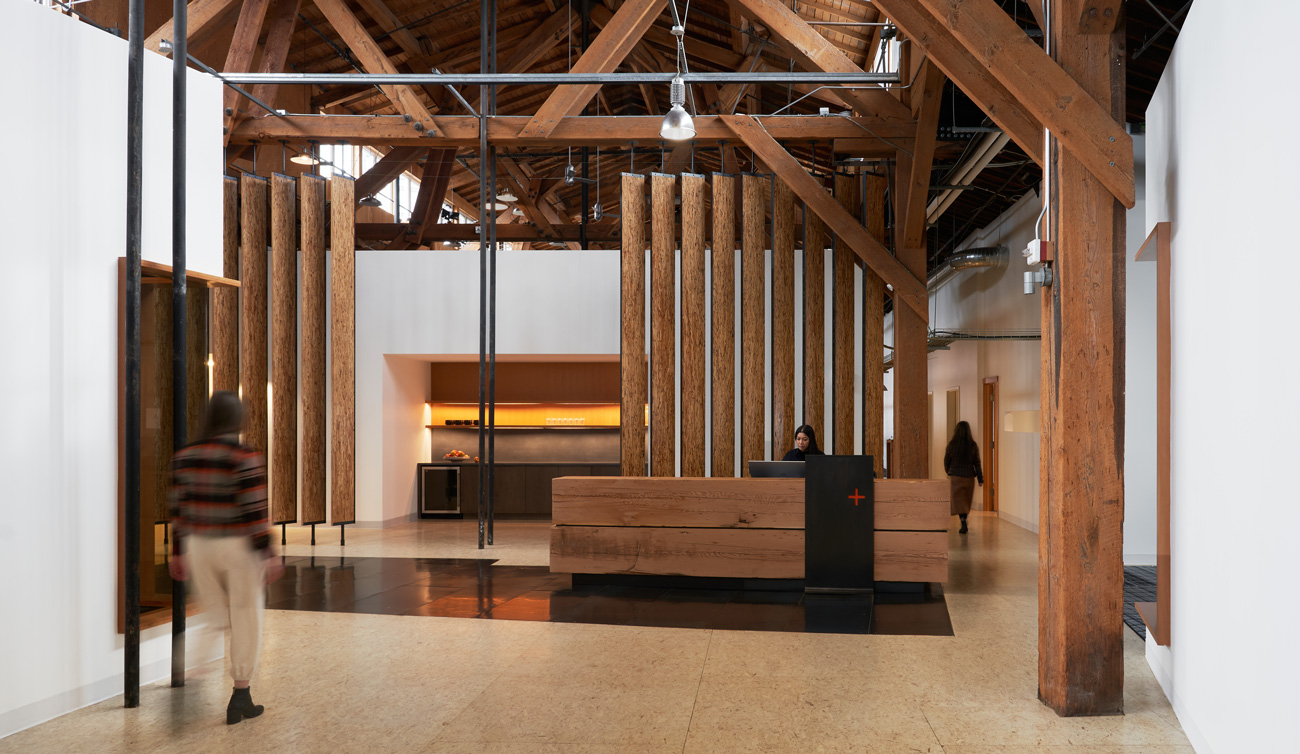
A significant milestone embodying this commitment is our Pier 56 Office in Seattle, which recently achieved Living Building Challenge (LBC) Petal Certification, becoming the first non-pilot tenant improvement project to be certified under the LBC 4.0 framework. Focused on the Materials, Equity, and Beauty petals, the project avoided 19 Red List chemical classes known to pose serious risk to human health and the ecosystem, sent advocacy letters to request and advance material disclosure and transparency, and prioritized material reuse and regional sourcing.
LOOKING AHEAD: ITERATIVE, ACTIONABLE STEPS
As the industry continues to evolve, we are seeing a clear trend towards greater transparency, accountability, and innovation in material selection. We are excited to be at the leading edge of this movement with other leaders, demonstrating that healthy materials are not a luxury but a necessity for truly sustainable and impactful design. To move from these concerns to concrete action, Mithun strives for ten essential steps in our design and selection process:
There is more work ahead, and each organization will navigate a unique journey related to sustainable design and healthy materials. We invite you to join us in building a healthier future, one material at a time.
This article originally appeared in the Daily Journal of Commerce A&E Perspectives Special Section.