Date Posted: 02.25.2026
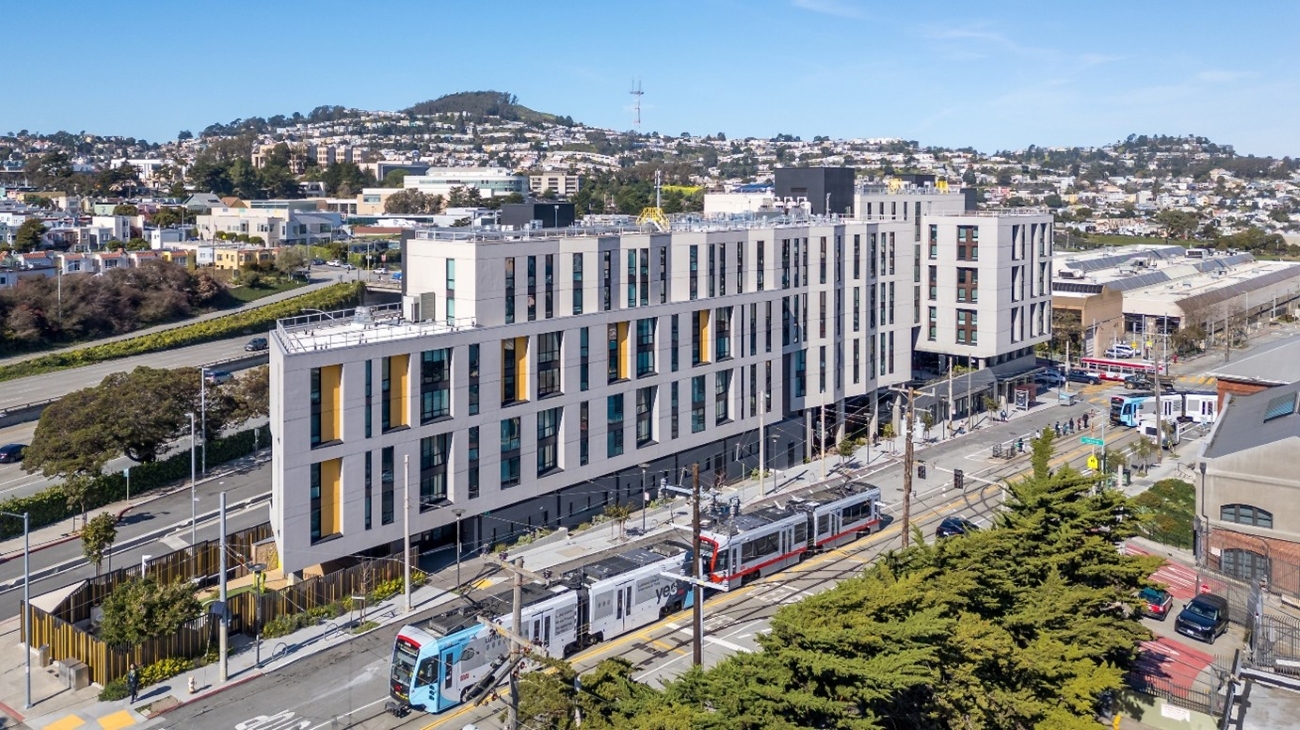
Kapuso at the Upper Yard demonstrates how affordable housing can advance equity, climate action and community connection. The project provides 131 permanently affordable homes for families earning up to 60 percent of the area median income, alongside community-serving ground-floor spaces and new public open space, establishing a landmark at Balboa Park Station, one of San Francisco’s busiest transit hubs.
Design discovery included an extensive, multi-lingual public outreach process that was intentionally structured to amplify community priorities. The team hosted public meetings and more than a dozen small conversations early in design with a wide range of community stakeholders that included public agencies, neighborhood groups and advocates for historically marginalized populations. The community pushed for more affordable homes, resulting in three extra stories and 40% more units than originally planned; the reconfiguration of BART drop-off to create a pedestrian-friendly transit plaza; and programming a neighborhood-serving ground floor with a locally owned café, bike hub, youth arts space and childcare. These strategies advance inclusive, place-based development in a neighborhood where 60% of transit riders and 88% of residents identify as BIPOC. A post-occupancy evaluation documented the building’s impact on residents and alignment with community goals.
TRANSIT-SUPPORTIVE DESIGN
The project transforms a challenging site at the interchange of BART, MUNI and Highway 280 into a welcoming, active, community anchor. More than transit-adjacent, Kapuso (‘one at heart’ in Tagolog) at the Upper Yard is transit-supportive: its design makes daily transit use easier and safer for residents and commuters alike. Thoughtful landscape design increases accessibility and safety through widened sidewalks, seating and planting that manages stormwater, offers wind protection and softens the urban environment. By creating a welcoming public realm, the plaza fosters community connection and extends the project’s low-carbon benefits to the broader neighborhood.
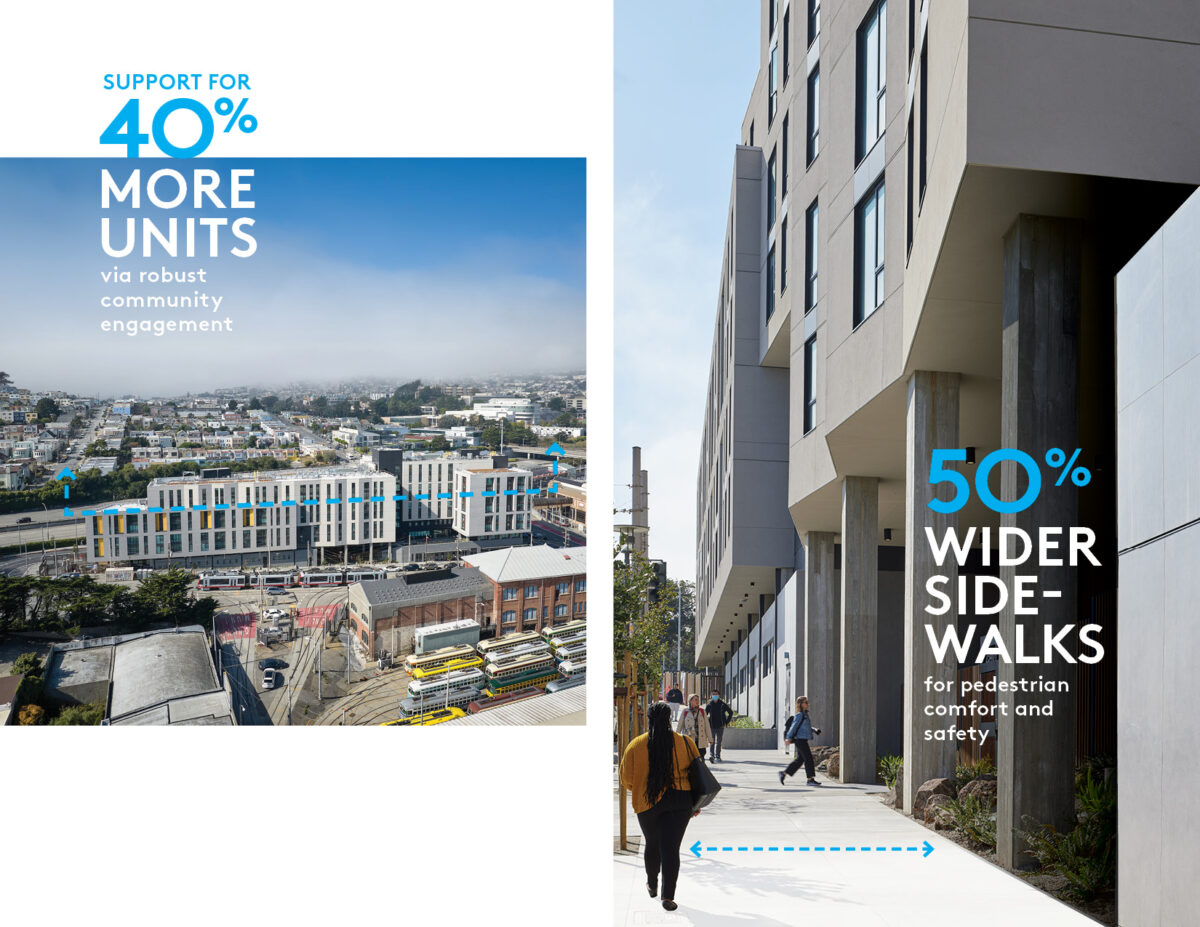
A multi-lingual outreach process elevated the voices of community members who advocated strongly for maximizing density, leading to three more stories of transit-adjacent housing for low-income families than originally anticipated.
ARCHITECTURE AND OPEN SPACE
The building responds to both context and community. Ground floor uses animate the transit plaza and provide neighborhood-serving programs including childcare, youth arts programming, a bike hub and a locally-owned cafe.
The west façade’s sweeping horizontality echoes the nearby freeway, while the east façade steps down to meet the neighborhood and frames a central “green heart” courtyard. This calm, restorative space provides residents daily access to nature and supports well-being in a dense urban setting.
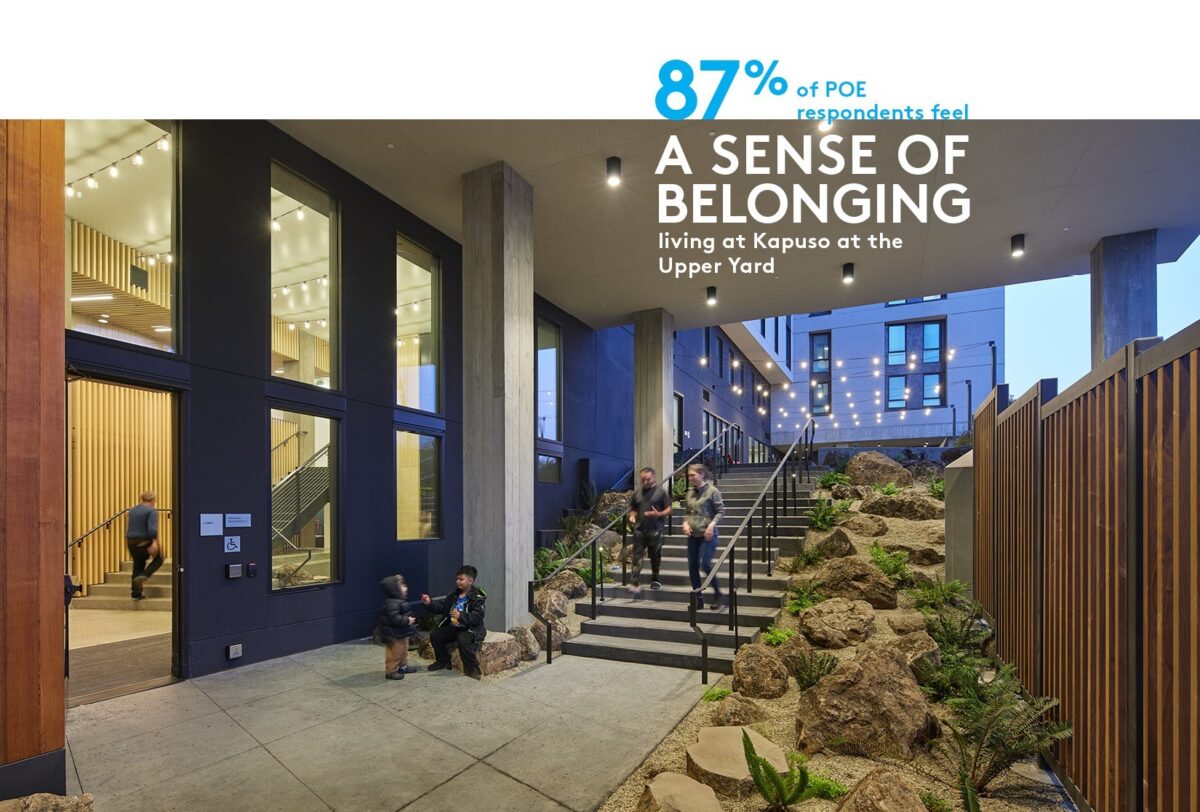
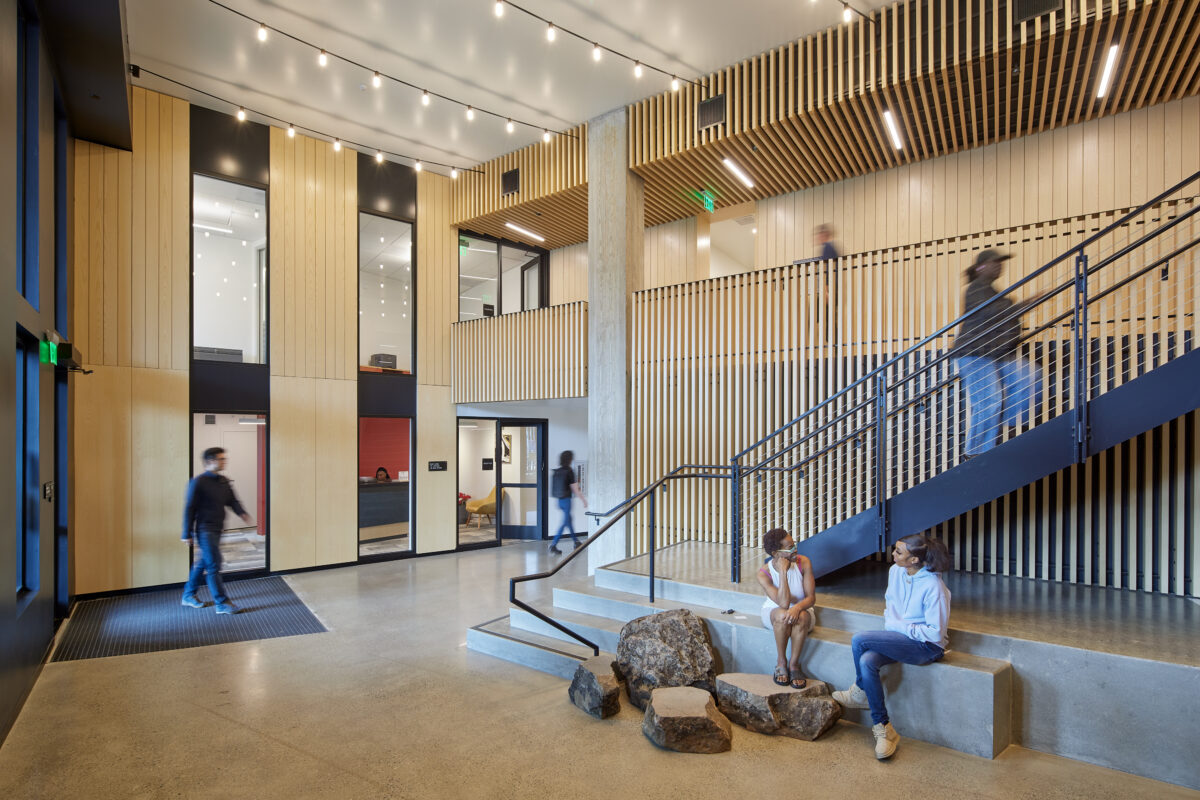
The residential entry courtyard helps residents decompress from the busy urban environment. A fern and boulder-lined stair leads to the second floor courtyard that is adjacent to the community room, creating biophilic opportunities for informal play and gathering space that is protected from prevailing winds and freeway noise.
Residents enter through a double-height court where ferns, boulders and filtered light create a sense of arrival. A landscaped stair leads to an upper courtyard for play and respite. A community room both opens to the courtyard and overlooks the transit plaza, linking residents to each other and to neighborhood life. At night, the space glows like a lantern, highlighting a sculptural artwork by local artist Aaron De La Cruz that celebrates family, home and belonging.
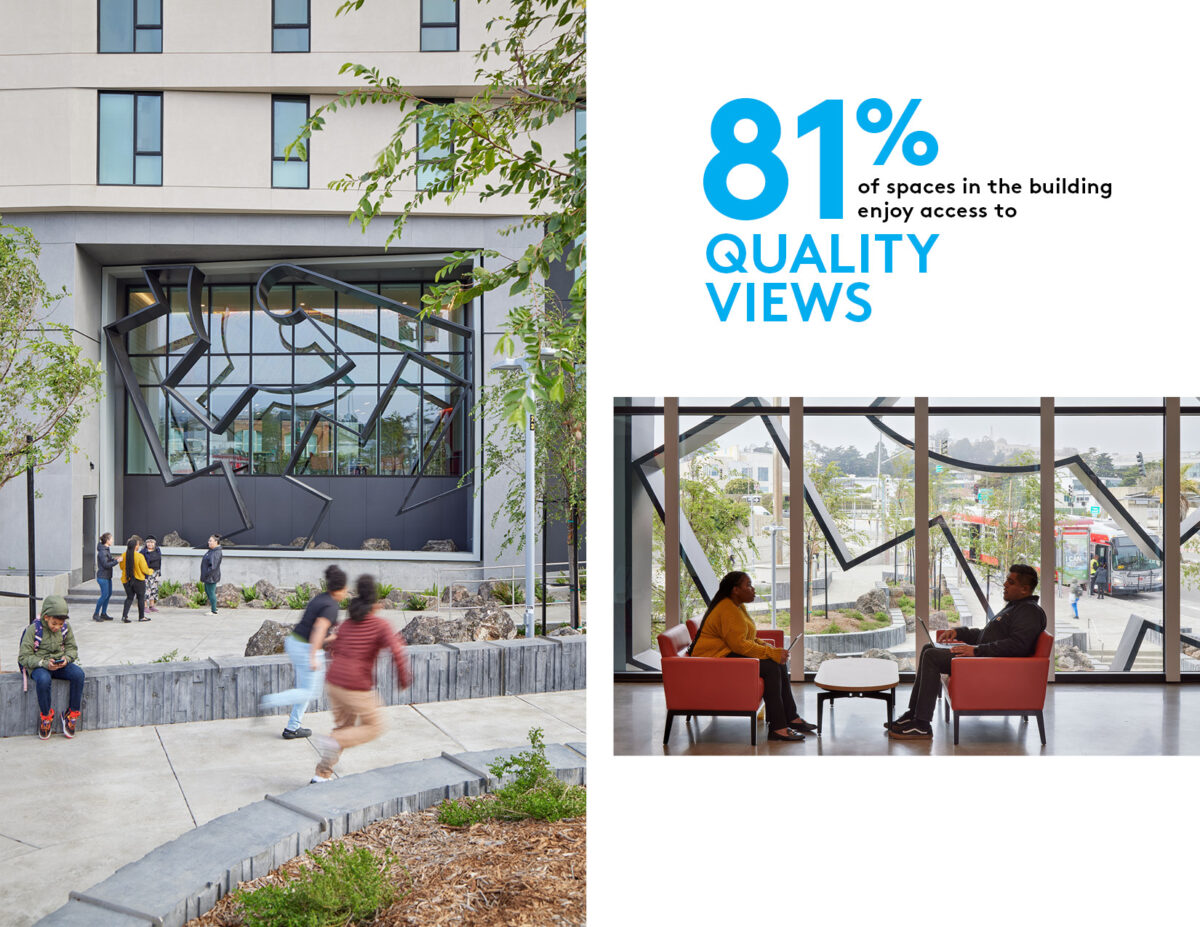
Public art overlooking the plaza by local artist Aaron de la Cruz expresses the power of home, family and belonging, part of the project’s commitment to equitable communities.
SUPPORTING COMMUNITY WELLNESS
Kapuso provides a secure, welcoming environment and onsite supportive programming that fosters inclusion. Design choices support both resident and community well-being, promoting everyday connection and belonging. Residents enjoy convenient access to transportation options, an onsite bike hub, cultural destinations and a nearby park. The second-floor residential open space is protected from wind, noise and particulates and provides views over the neighborhood. Daylight and views at the twinned indoor and outdoor ‘social stairs’ encourage residents to forgo the elevators.
Double-height lounges inside provide flexible space for homework, play and informal gatherings. Property management staff reported that the community room has become a hub for engagement, hosting movie nights, meetings and well-attended bingo nights. The second-floor flexible youth space is now home to a non-profit serving low-income children, demonstrating the adaptability of the design to evolving community needs.
The childcare center’s recessed entry creates a friendly area for neighbors to meet during drop-off and pick-up. A Coast Live Oak, a hardy and iconic northern California tree, provides shade for the children play area, which features a natural cork-based resilient matting surface and native grasses to encourage discovery and free play. Custom play elements were crafted by local carpenters and fabricators using responsibly sourced, recyclable materials — reinforcing a design process rooted in stewardship and community partnership.
LOW-CARBON STRATEGIES
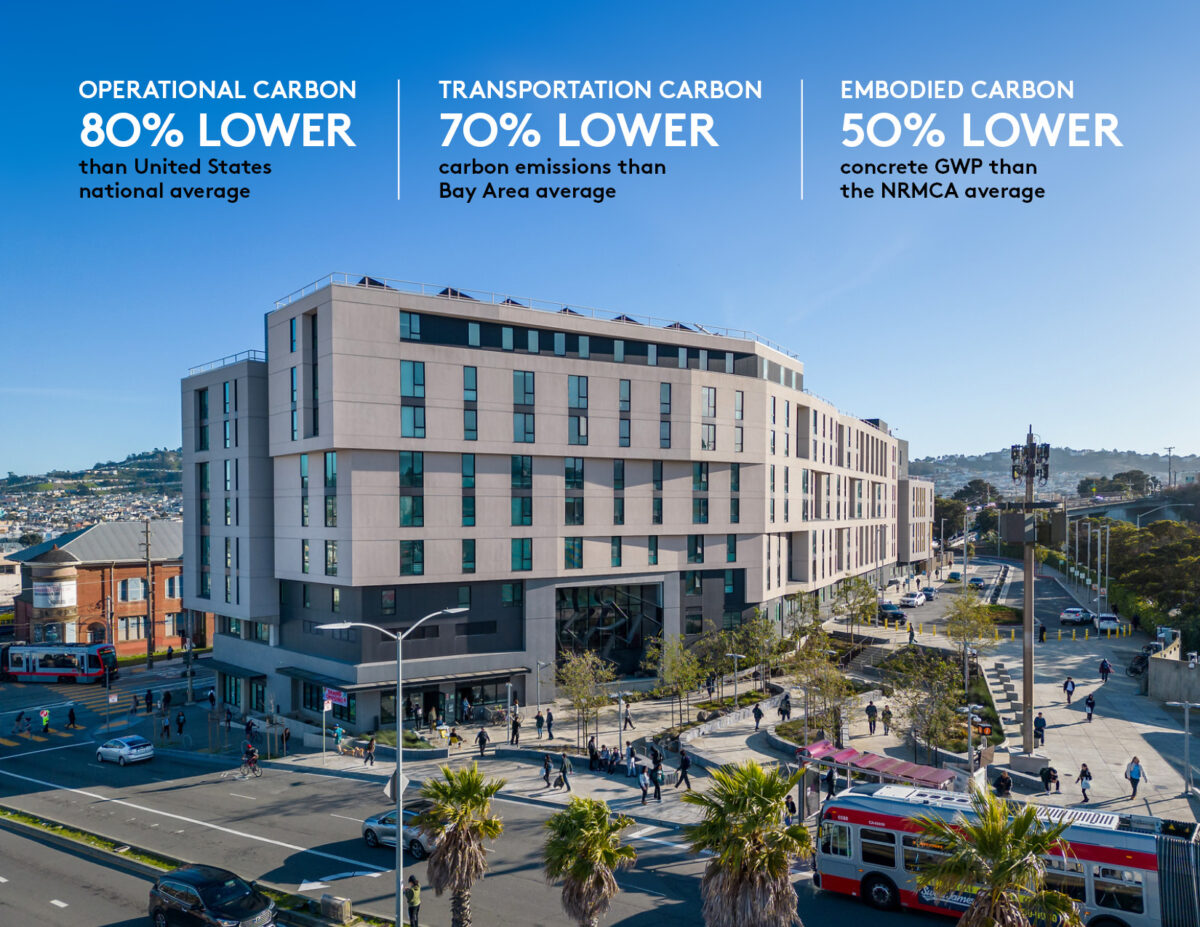
Kapuso at the Upper Yard is a model for decarbonization. The all-electric building uses a high-performance envelope, efficient systems and rooftop renewables to achieve a net energy use intensity (EUI) of 15.2 kBtu per sf per year. Together, these strategies reduce operational carbon by 80% compared to the national average and surpass 2030 Challenge targets. Concrete with 50% lower GWP than regional average reduces embodied carbon. The new plaza encourages walking, biking and transit ridership as part of the project’s holistic approach to decarbonization.
Rising temperatures, extreme heat and wildfire smoke are already commonplace on the West Coast, particularly in California. MERV 13 filtration in the central air system mitigates both freeway pollution and poor air quality from the growing threat of wildfire smoke. The suite of passive strategies – including operable windows and an optimized envelope – enhance adaptability and minimize cooling loads. Reducing peak loads today helps maintain performance in future climate conditions, increasing building and local electricity grid stability and ensuring resident comfort in the long term. Increased onsite stormwater capacity manages heavier rainfall events, reducing runoff and supporting long-term resilience.
POST-OCCUPANCY RESULTS
A year after move-in, the design team and clients conducted a multilingual post-occupancy evaluation of Kapuso at the Upper Yard, combining surveys, on-site observations and property management interviews. Results affirmed the project’s success: 87% of residents feel a strong sense of belonging, and more than 80% of respondents state that their health or the health of their family members has improved [as a result of living at Kapuso] the last year. 75% of respondents use public transit regularly each week. Property management reported that community rooms host a wide variety of activities, from bingo to nonprofit youth services to cultural gatherings, demonstrating the need to design for adaptability, and the role these spaces play in both community resilience and responding to evolving community needs. 78% of respondents agree or strongly agree that “Living here makes me feel like I can live a healthy and happy lifestyle.”
Through its integration of housing, transit and community space, Kapuso at the Upper Yard demonstrates how design can create lasting social, environmental and economic value. It is a place where families thrive, neighbors connect and a low-carbon future feels possible.