Gender Equity in the Built Environment
Vision
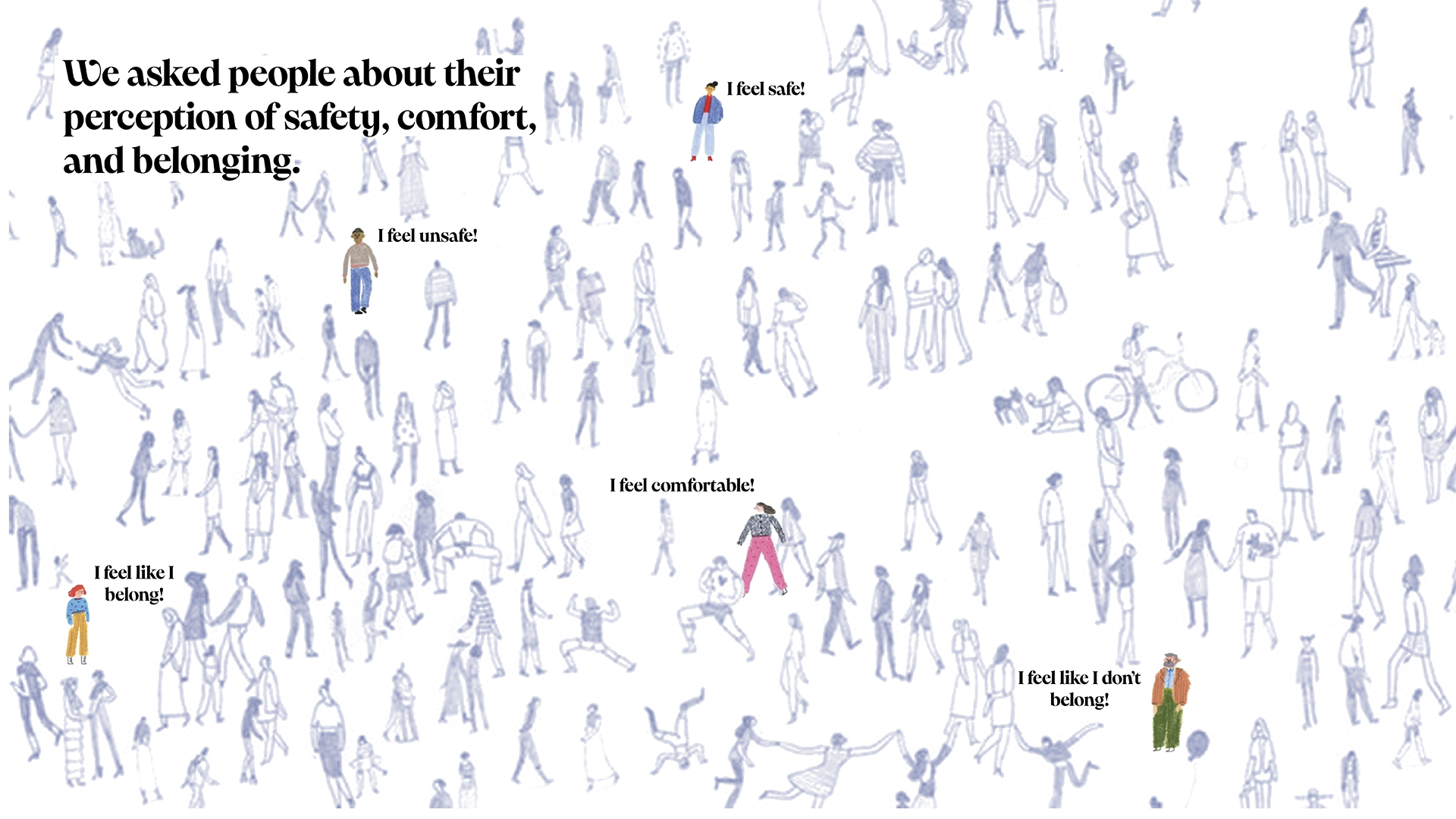
Spatial gender inclusivity has largely been studied through a binary conception of gender, highlighting the experience of cisgender (white) women and obscuring the experience of transgender, non-binary, gender nonconforming and queer communities — leaving designers looking to address these inequities without appropriate resources. To bridge the gap, this research analyzes the lived spatial experiences of these communities, and quantitatively and qualitatively assesses their levels of comfort, safety and belongingness within a range of built environments.
Research
The research methodology represents a queer way of conducting design research, infusing the lead researchers’ personal lived experience as trans and queer individuals into the data. Additionally, traditional research methodologies were used, including a national digital survey and semi-structured interviews. The purpose of the survey was to gather data to answer research questions and identify what role gender identity played in perceptions of everyday spaces. Survey questions were crafted to be legible to non-design-trained users of spaces, while capturing precise data that designers could then effectively translate into actionable design principles. In addition, interviewing trans and non-binary designers of built space was critical to add a layer of queer qualitative data to our findings. The interviews added a personal dimension to the research because interview subjects shared both language around space and design, as well as queer lived experience.
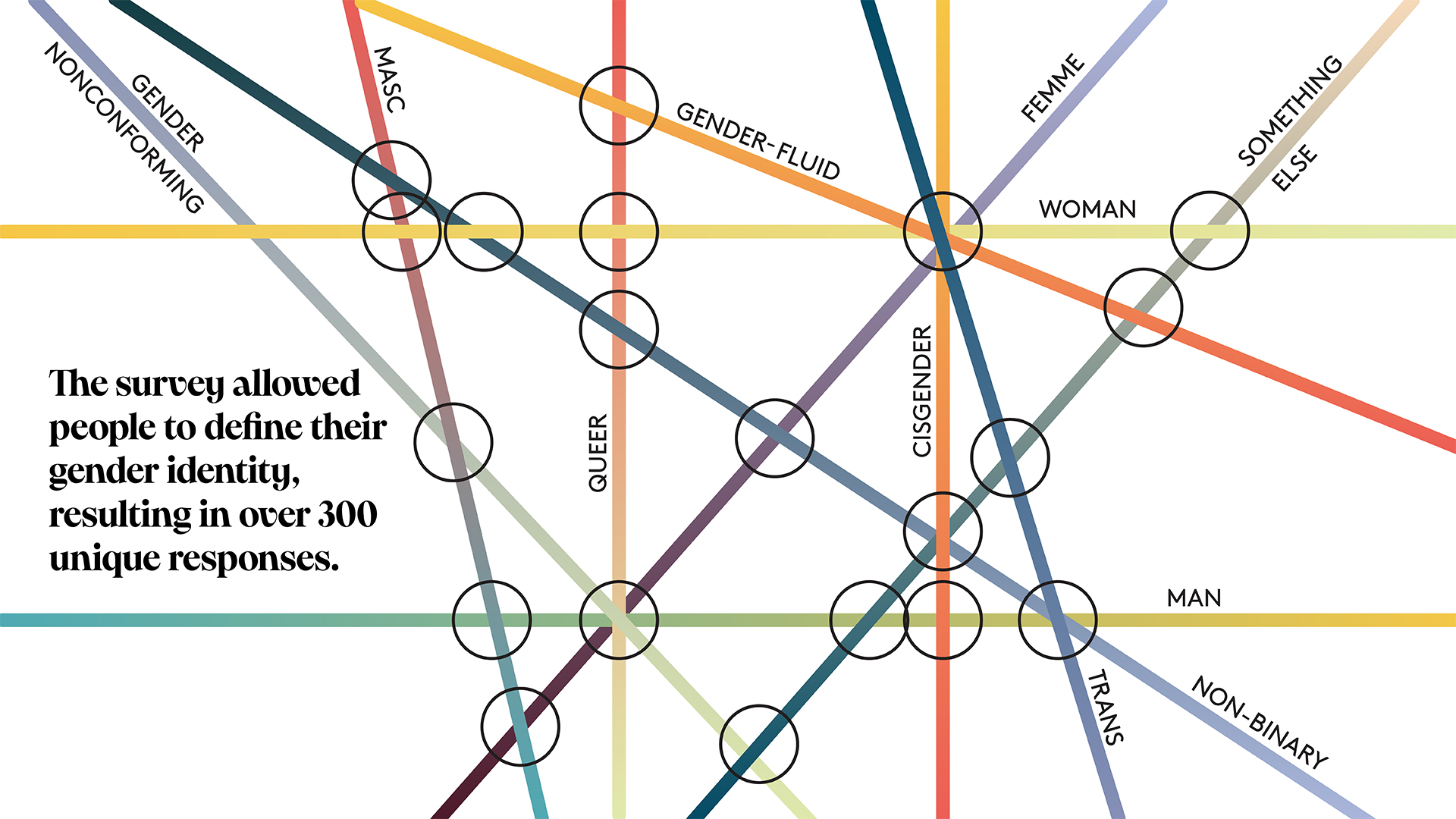
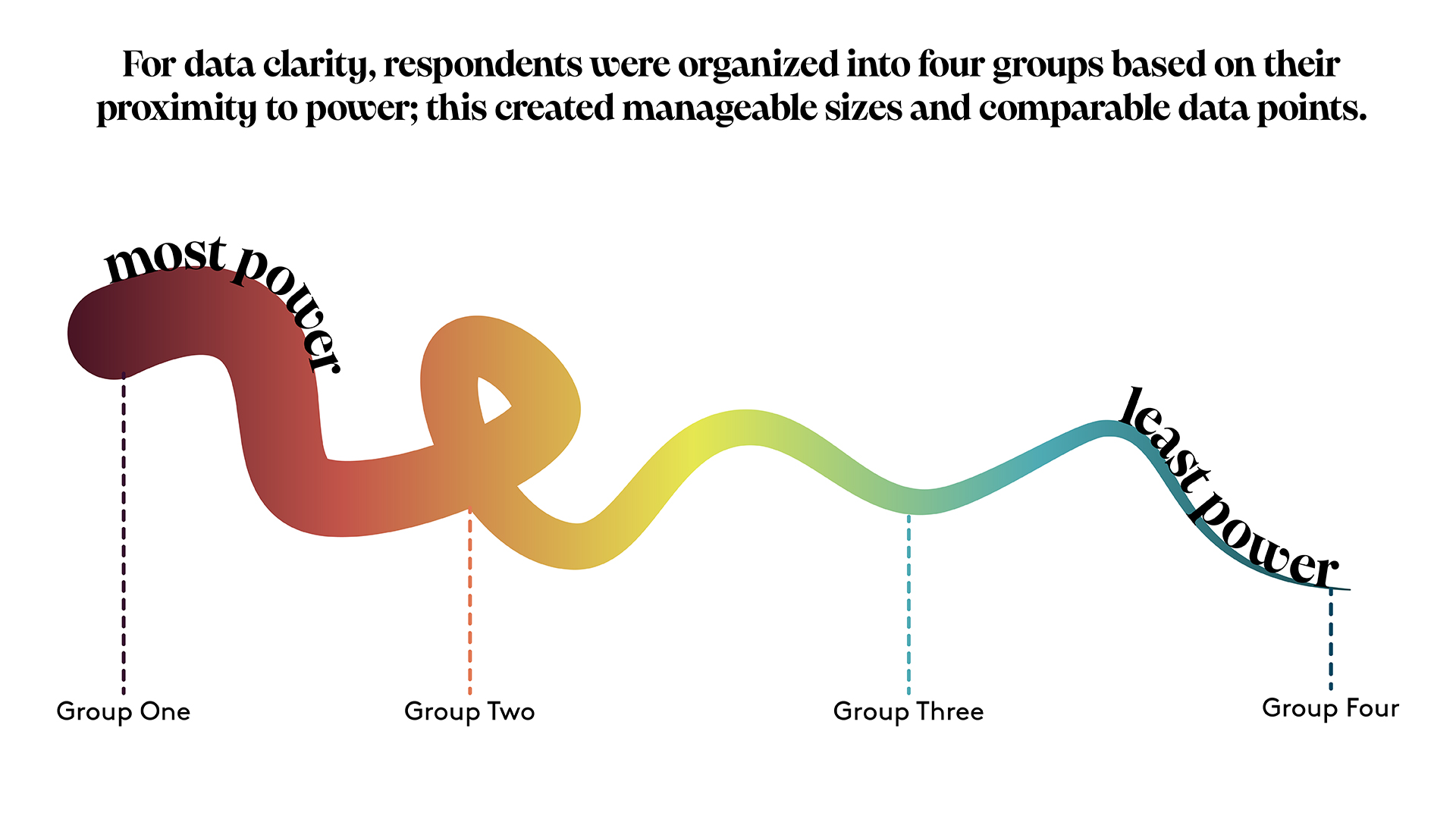
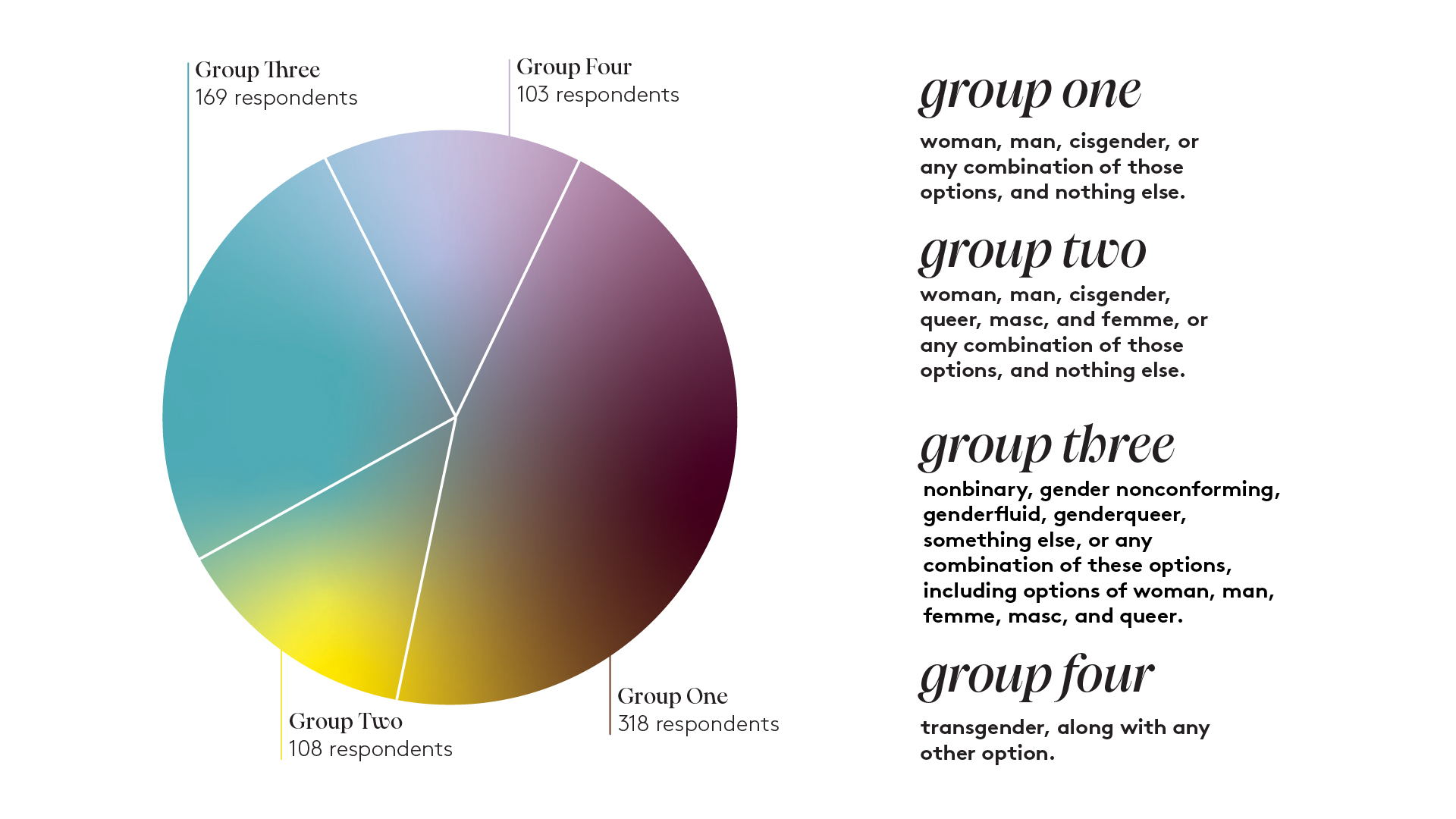
A key component to analyzing the complex data set was aggregating unique experiences into a manageable and comparable number of categories. Having fewer gender categories, each with a similar number of respondents, enabled more rigorous comparative analysis, a more anonymous survey approach, and more meaningful and statistically significant findings. The team landed on four groups based on their personal identities’ proximity to power within a patriarchal culture. This aggregation method is imperfect and non-static. The rationale behind these groups, as well as the groups and respondents themselves, will change with time.
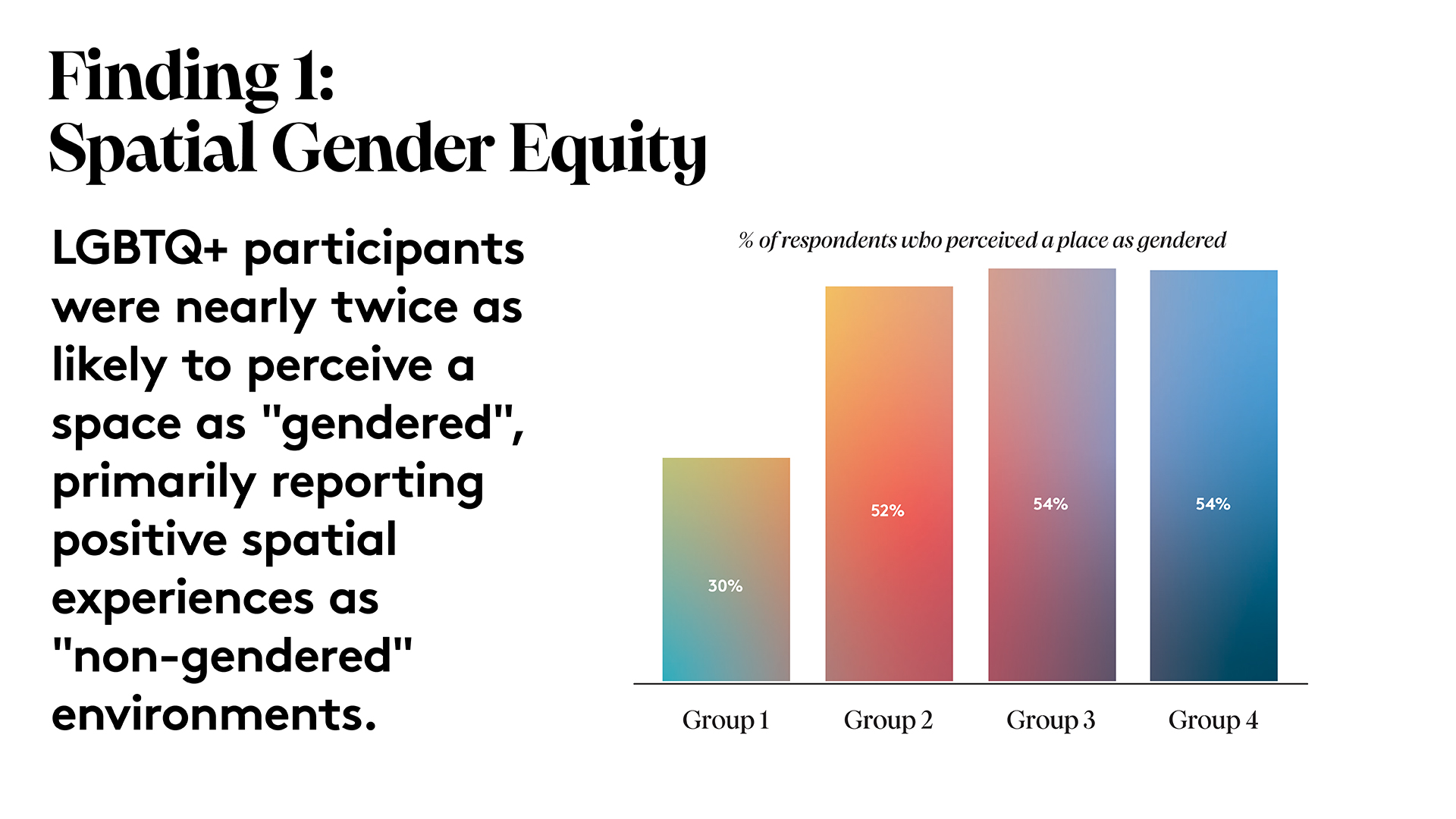
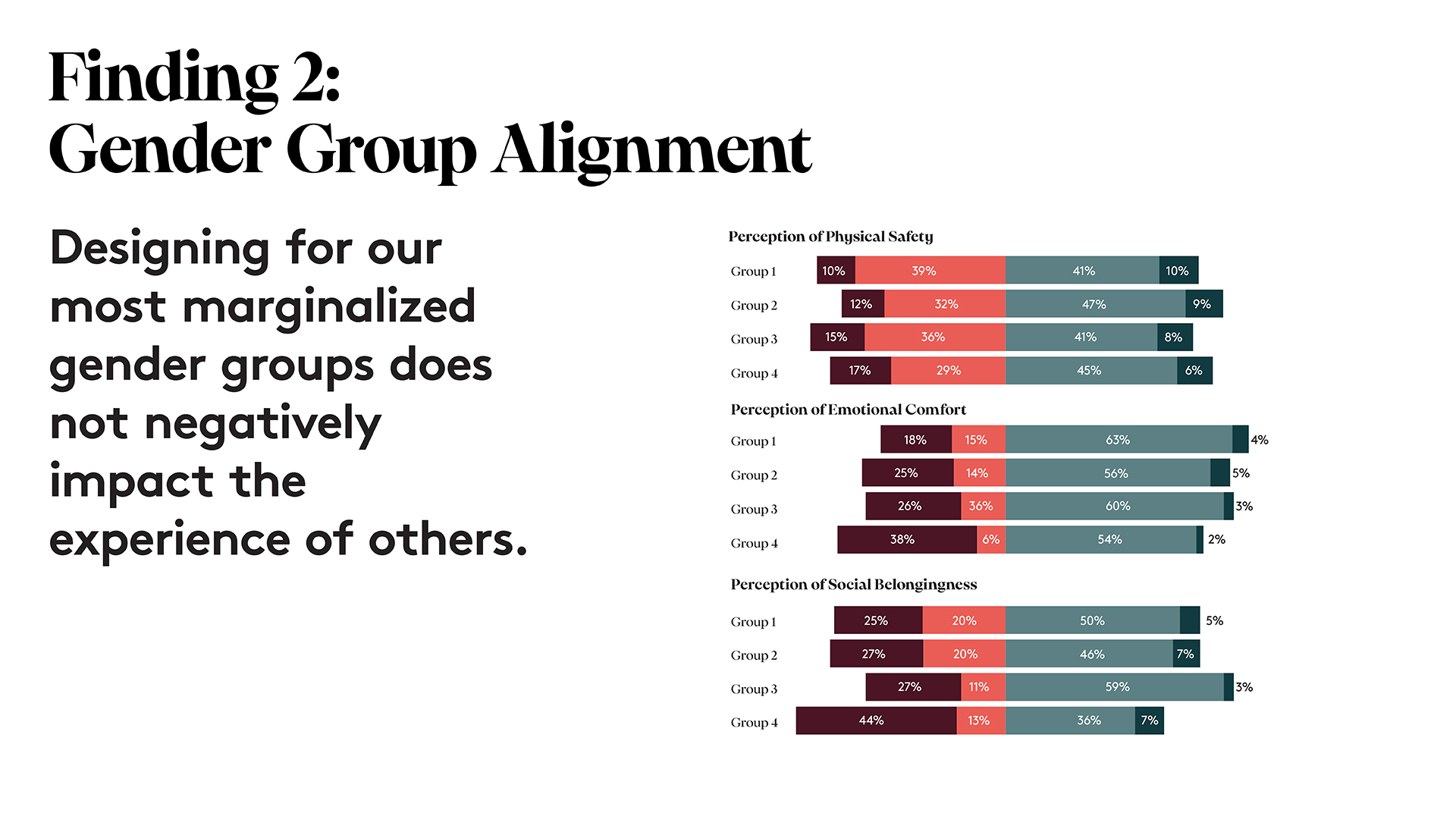
How can the robust, nuanced lived experience of a wide variety of people be combined to inform actionable design principles that can positively impact transgender, non-binary, gender nonconforming and queer individuals? The team found that LGBTQ+ respondents were more likely to perceive a space as gendered. While the team found alignment in the perception of safety, comfort and belonging across all gender groups, there were specific spatial qualities that have an especially significant impact on LGBTQ+ individuals in the built environment.
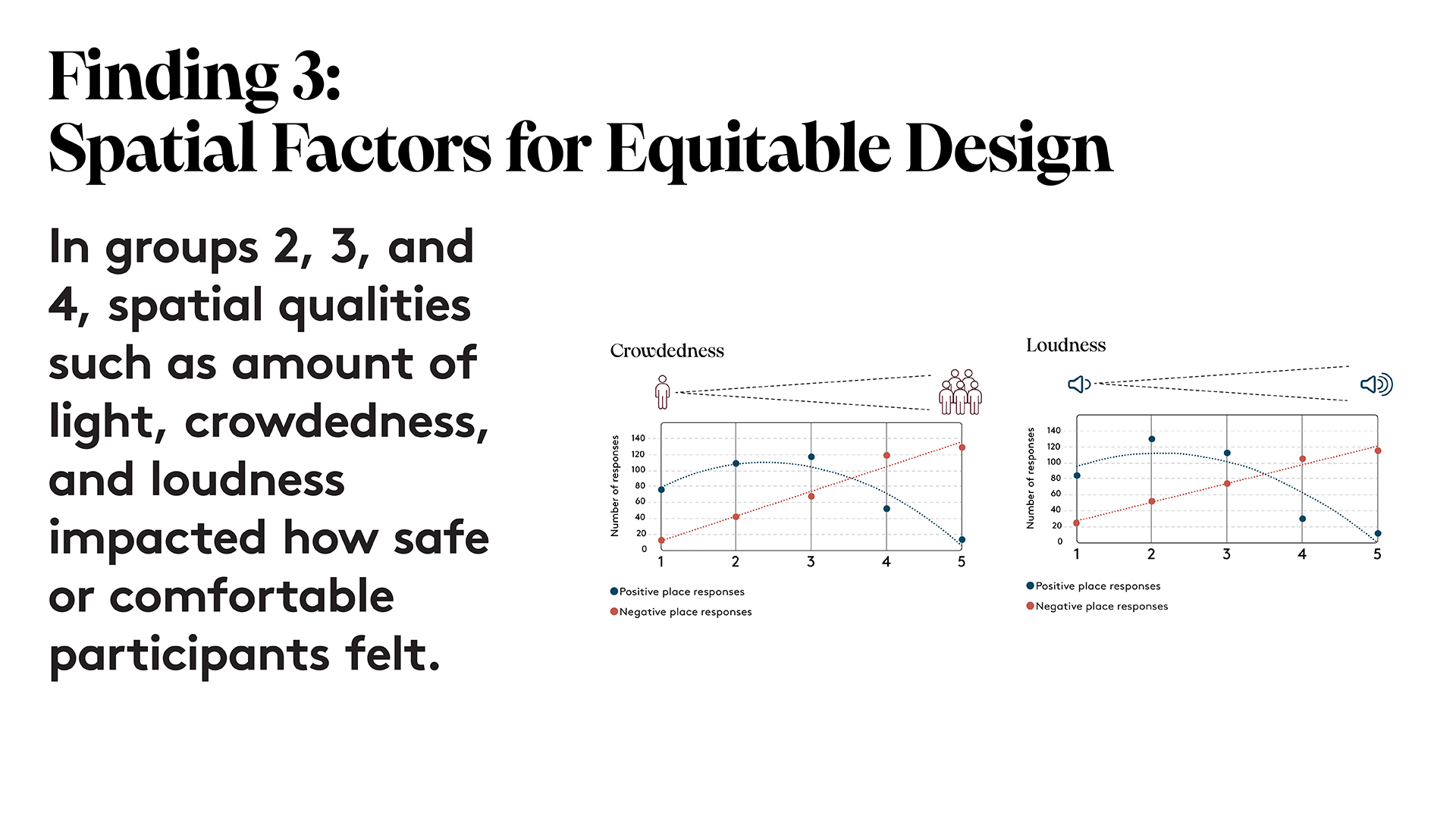
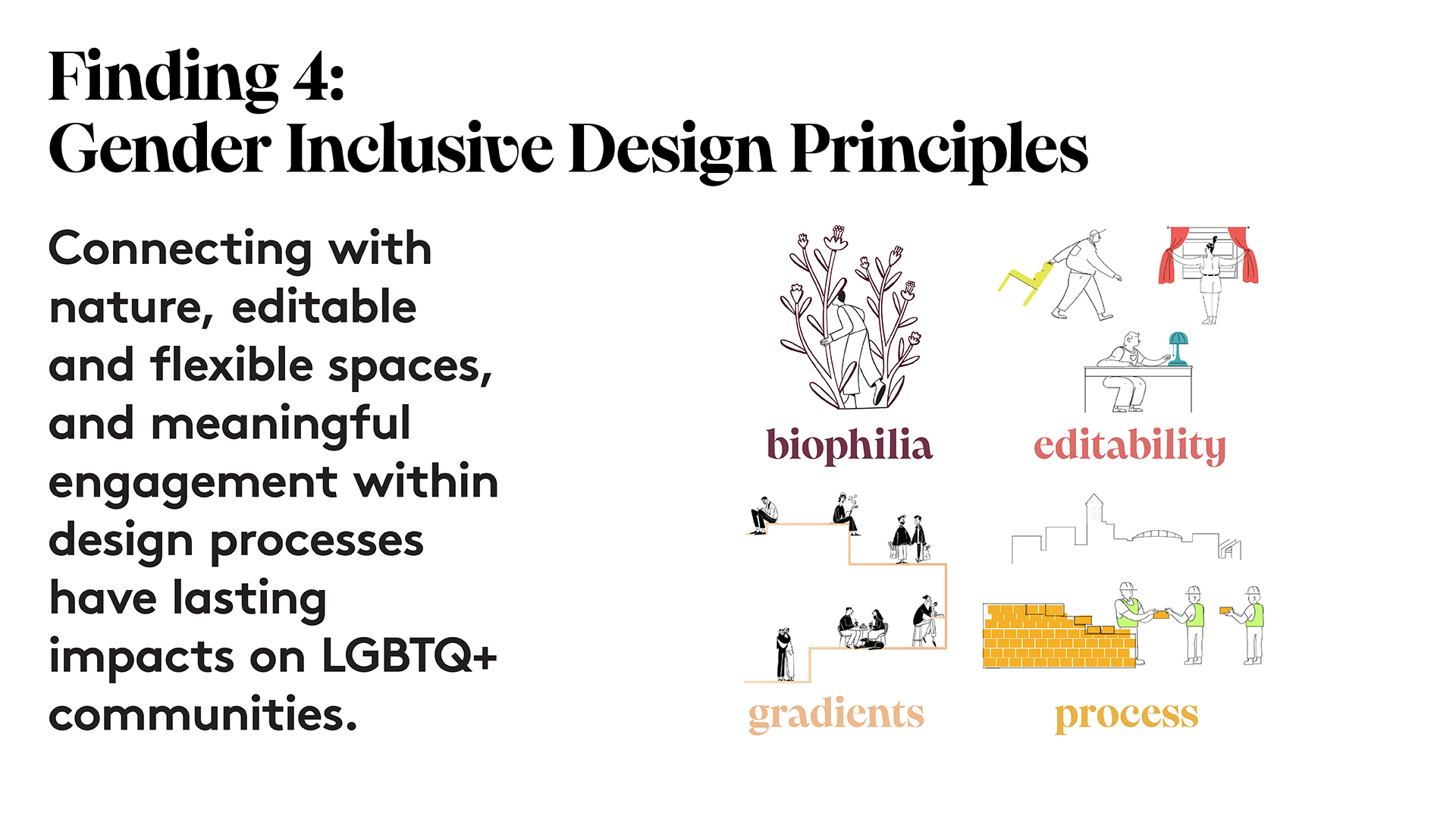
These findings led to a set of recommendations that can serve as a starting point for positively impacting the spatial experiences of marginalized gender groups. Key spatial qualities include the amount of light, sound and crowdedness. By focusing on trans and non-binary individuals, designs can enhance everyone’s perception of safety, comfort and belonging and deliver positive impacts all occupants of a space. Learn more about the findings via the comprehensive report: Designing Beyond the Binary.
Looking Forward
This research effort is a tiny step into positive changes for LGBTQ+ individuals, but it has its limitations. Intersectional approaches are important as gender is one axis of identity. People are complex, and it's critical to understand and accommodate other identities, whether fixed or fluid. This research is limited in its approach to this intersectionality, and it is hoped this can be built upon to more thoughtfully include race, ethnicity, national origin, age and other identifiers. There is need for additional research to understand how built spaces can respond in more acute and long-term ways to different forms of violence against trans, non-binary and queer individuals and communities.